Scheme Name: ESVHD-MVU
· Department: Animal Husbandry Department/ Dairy Development, Government of Uttarakhand
· Year of Launch: 16 November, 2022
· Approval: GO No. 631/XV-1/22-1(8) 2021/26.05.2022
· Geographical Coverage: 60 Blocks of 13 Districts
· Status: 60 customized "hospitals on wheels" equipped with GPS tracking are actively deployed via a centralized command dashboard. Process initiated to launch an additional 35 MVUs under the state sector to cover the remaining 35 blocks.
Problem Addressed and Objective
Sectoral Problem & Service Gaps
The primary gap the scheme addresses is the lack of "last-mile" physical accessibility to veterinary care, which is severely compounded by Uttarakhand's mountainous geography, rugged terrain, and remote, far-flung villages.
Historically, livestock owners in the state faced three major obstacles:
- The Transport Dilemma: Moving a sick, injured, or large dairy animal down steep hills to a stationary government veterinary hospital or dispensary is often physically impossible or economically unviable for a smallholder farmer.
- Delayed Emergency Response: Due to isolation and long distances, acute conditions (such as dystocia/clearing labor complications, bloat, or severe trauma) frequently turned fatal before a doctor could reach the site.
- Economic Breakdown: Preventable or treatable conditions often resulted in animal mortality or a permanent drop in milk yield, directly threatening the financial stability of the rural economy.
Objective of the Scheme
The operational blueprint of the 1962 MVU service is focused on achieving the following clear objectives:
- Deliver Doorstep Veterinary Healthcare: To eliminate the need for farmers to transport sick livestock by taking diagnostic, curative, and minor surgical services directly to the farmer’s doorstep.
- Establish a Centralized Emergency Response System: To provide localized, rapid-response triage through a dedicated, toll-free centralized call center (1962), offering instant Online veterinary services.
- Strengthen Prophylactic and Production Support: To actively minimize regional outbreaks of infectious diseases (such as Foot and Mouth Disease and PPR) through systematic, vaccination drives, sample collections.
Scheme Design and Key Interventions
The 1962 Mobile Veterinary Unit (MVU) program is a flagship initiative launched under the Government of India's Livestock Health & Disease Control (LHDC) scheme and active in Uttarakhand to revolutionize rural livestock healthcare.
Target Beneficiaries
- Rural Livestock Owners & Farmers: Small-scale farmers, dairy cattle breeders, and shepherds living in rural, underserved, and remote areas.
- Migratory Pastoralists: Shepherds during their seasonal high-altitude and winter migrations across the hilly districts.
- Animal Population: Covers all major domestic livestock (cattle, buffaloes, sheep, goats) as well as emergency care for stray animals.
Eligibility
- Universal Access: Any resident livestock owner or farmer within the state of Uttarakhand whose animals require veterinary service.
Assistance / Subsidy / Services Provided
- 100% Free Doorstep Veterinary Service: No fee is charged for the visit, examination, or procedures.
- Comprehensive Clinical Care: Treatment for traumatic injuries, emergency surgical procedures, and handling of critical calving (obstetrics/gynecological) complications.
- Free Medicine Dispensation: Essential medicine directly to the farmer without costs.
Delivery Mechanism
- The 1962 Emergency Central Call Centre: Livestock owners dial the toll-free number 1962 to register a complaint/emergency.
- Hybrid Deployment Model:
- On-Demand Emergencies: The centralized call center, based on the location of the distress call, moves the nearest MVU.
- The Field Team: Each vehicle functions as a "hospital on wheels" and is structurally staffed by:
- A Veterinary Officer (VO)
- A Para-veterinarian (Assistant)
- A Driver-cum-attendant
Institutional Partners
- Administrative Lead: Department of Animal Husbandry, Government of Uttarakhand.
- Implementation & Operational Partners: EMRI Green Health Services.
Distinctive or Innovative Features
- Transporting large, sick livestock down treacherous, hilly terrains to fixed district clinics is highly difficult. This service shifts the entire operational burden from the farmer to the state by bringing a fully capable hospital to the doorstep.
- Every MVU is strictly integrated with GPS tracking. The central command dashboard identifies the closest vehicle to optimize route planning and reduce response time.
If an MVU is delayed due to weather or landslides, call-center veterinary doctors provide immediate tele-consultation and stabilizing instructions over the phone to the farmer.
Financial Outlay and Expenditure
Approved Outlay and actual Expenditure, yearwise

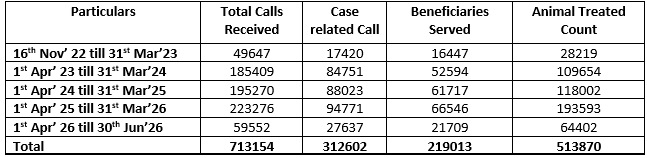
Physical Outputs
Employment and Livelihoods Generated
Direct employment – 188 (62 veterinarian, 60 Para-vet, 60 Driver-cum-Attendant and 06 Call Executive )
Ground-Level Outcomes and Impact
· Under the 1962 mandate, essential diagnostics, life-saving medicines, and professional fees are delivered free. So effective net income increase small and marginal Farmers.
· Reduced Livestock Mortality Rates - Timely intervention during critical conditions like dystocia (calving complications), traumatic injuries, accidental poisoning, and acute infections has drastically saved animal lives.
Implementation Challenges and Corrective Action
· Due to sparse, highly scattered populations in hill districts (like Pithoragarh, Uttarkashi, and Chamoli), a single emergency call could consume an entire day's travel for one MVU, leaving other callers in the queue without timely service.
· Delays in the release of the central share of funds.
· Farmers often called the emergency 1962 line for routine, non-emergency tasks like standard deworming or castration, clogging up emergency lines and delaying critical, life-saving dispatches.
· Key Lessons for Future Programmes:-
- Institutionalizing "Tele-Medecine" Backups
- Separation of "Emergency" and "Preventive" Cases
- Heavy-duty two-wheelers for rugged mountain terrain.
Present Status and Way Forward
· 60 customized MVUs are currently operational across the state, ensuring that even remote blocks in difficult Himalayan terrains have mobile coverage
· The cumulative treatment count has scaled significantly, 5.13 Lakh animal treatments since the scheme's inception.
· Operating under the central Livestock Health & Disease Control Programme (LHDCP), Uttarakhand benefits from the favorable 90:10 (Central:State) funding ratio designated for Himalayan states.
· In the remaining 35 blocks starting of 35 MVU in state sectors are under process.
Success Stories of ESVHD-MVU Scheme
Case 1:
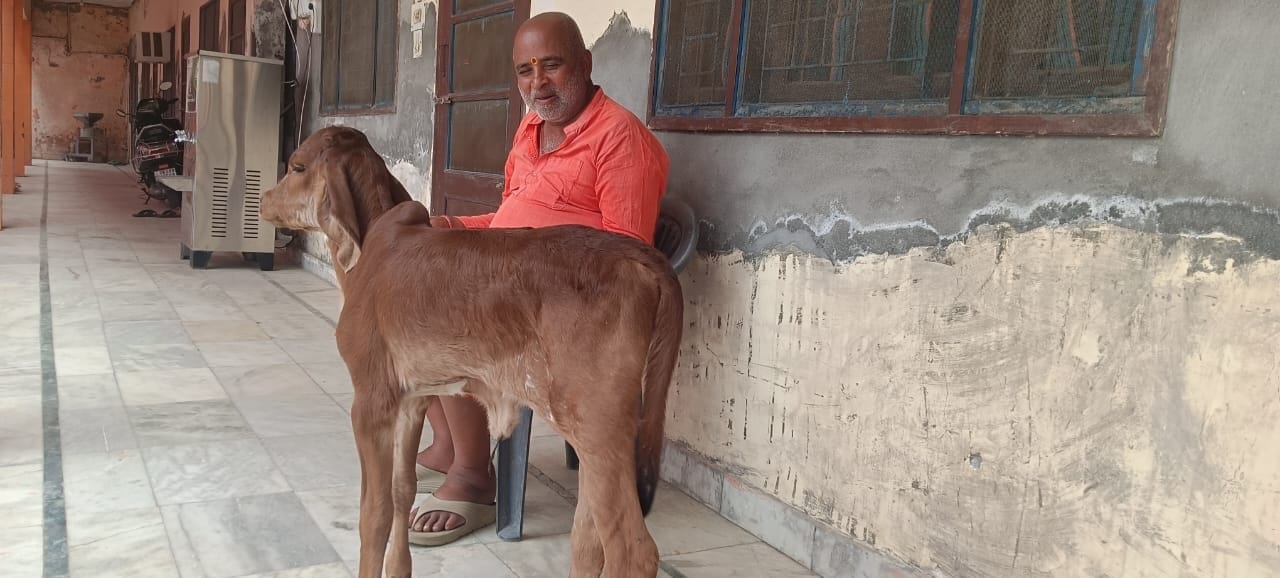
Pediatric Atresia Ani Correction (Congenital Malformation)
- Location / Date: Bahadrabad MVC, Haridwar | March 12, 2026
- Clinical Presentation: 3-day-old male non-descript (ND) calf found bloated and restless due to the complete absence of an anal opening (unable to void meconium).
- Surgical Intervention: The field team applied local anesthesia (Lignocaine 2%,8 ml) and made a plus-shaped incision. To prevent immediate closing and ensure patency, a modified, blunt 2ml syringe hub was placed into the newly constructed anal canal and secured using simple interrupted sutures between the skin and mucous layer.
- Therapeutic Management:Gentamycin (2ml IM), Meloxicam (2ml IM), Tribivet (2ml IM), with a Povidone Iodine antiseptic routine.
- Outcome: Animal achieved complete functional recovery.
Case 2:
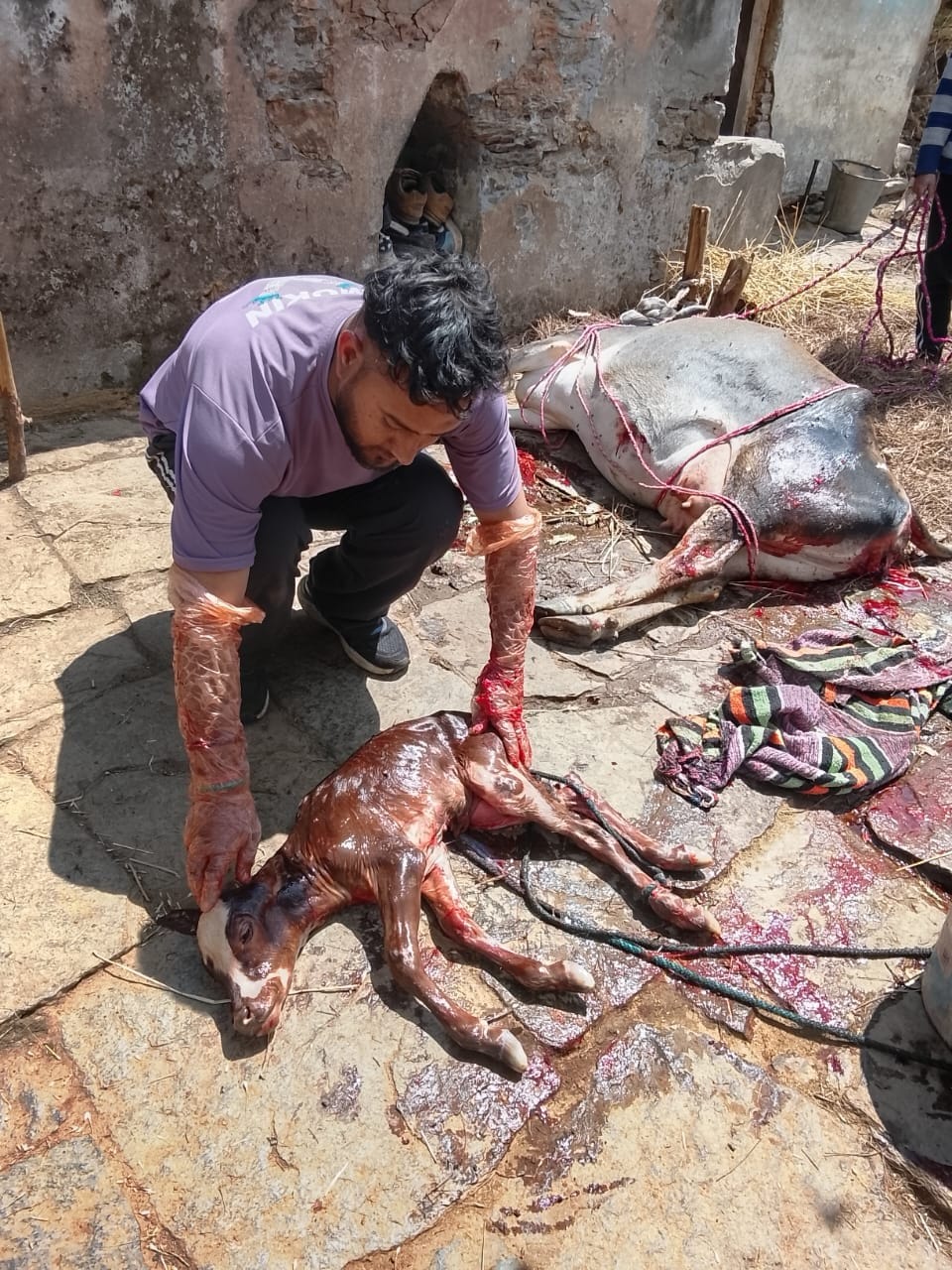
Management of Obstructive Dystocia
- Location / Date:Dewal MVC, Tundri Gaon, Chamoli | May 6, 2026
- Clinical Presentation: 7-year-old pregnant cattle in severe, unproductive labor strains since the previous evening; presenting with reduced feed intake and complex fetal presentation.
- Clinical Diagnosis: Transverse presentation, dorsal & right cephalo-ilial position, paired with forelimb shoulder flexion.
- Medical Intervention: The team performed mechanical repulsion and manual correction within the birth canal using liquid paraffin lubrication. A live calf was successfully extracted via controlled manual traction.
- Therapeutic Management: Systematic administration of Ampicillin (2g IM), Meloxicam (10ml IM), Chlorpheniramine Maleate (10ml IM), Tribivet (12ml IM), alongside a uterine lavage combining Povidone Iodine diluted in Metronidazole.
- Outcome: Cow and calf fully stabilized.
Case 3:
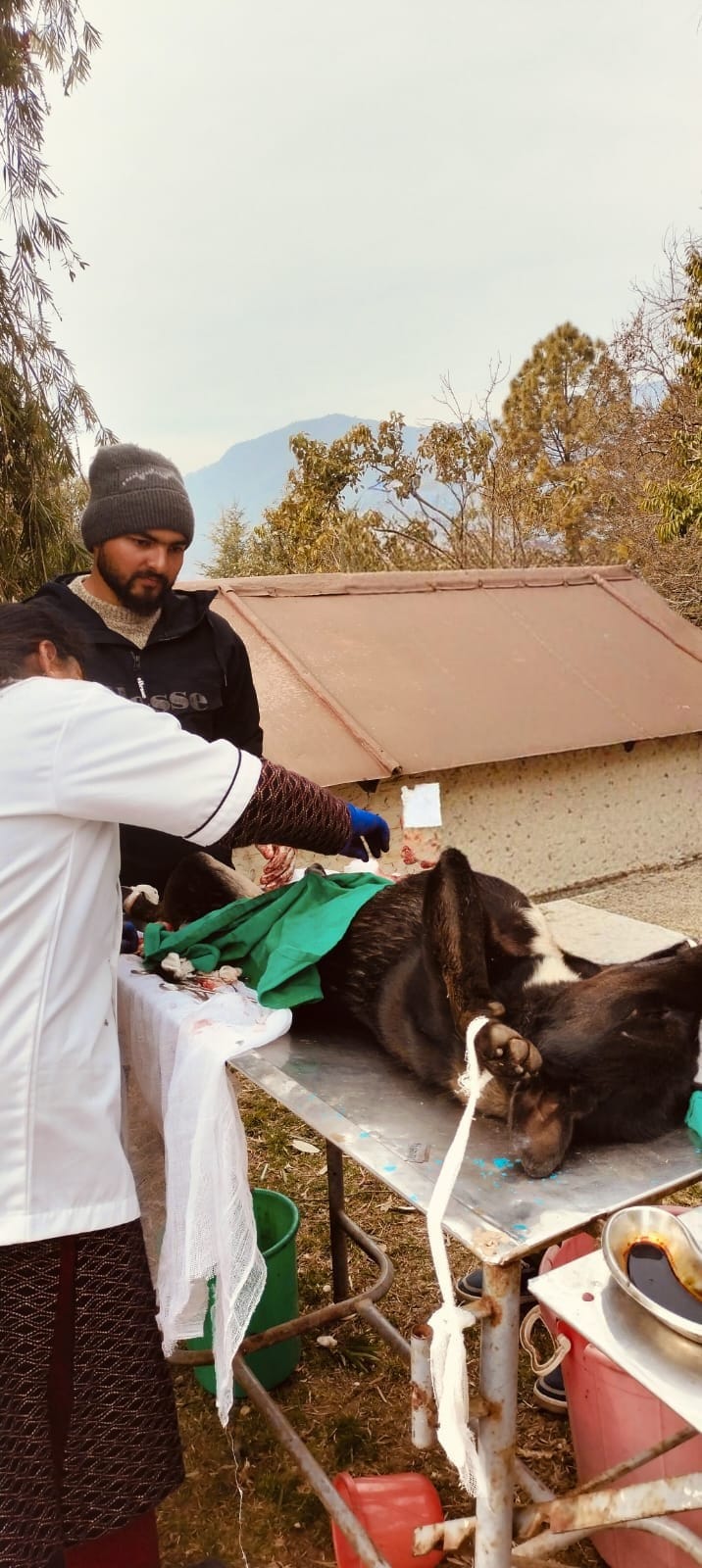
Advanced Post-Traumatic Amputation of Right Hindlimb in Dog.
- Location / Date:Gangolihat MVC, Pithoragarh | February 14, 2026
- Clinical Presentation: 2-year-old male dog presenting with an acute open compound fracture of the right tibia-fibula following a vehicle accident. Showed heavy muscular tearing, visible bone exposure, pale mucous membranes, and high blood loss.
- Surgical Intervention: Radical emergency amputation performed under balanced general anesthesia (Atropine 1.3ml IM, Xylazine 1ml IM, Ketamine 2ml IM, maintained via Ketamine-Diazepam 3:1 ratio). A clean skin flap was crafted below the stifle joint, separating the tibia from the femur. Hemostasis was managed via artery forceps tracking, electrical cauterization, and topical adrenaline. The thigh musculature was structured over the distal femoral condyle using continuous patterns before closing the skin with simple interrupted sutures.
- Therapeutic Management: Dual fluid therapy (500ml Normal Saline pre- and post-op), paired with Ceftriaxone (2ml IM for 5 days), Meloxicam (0.8ml IM), and CPM (1ml IM).
- Outcome: Dog survived and achieved complete surgical healing.