

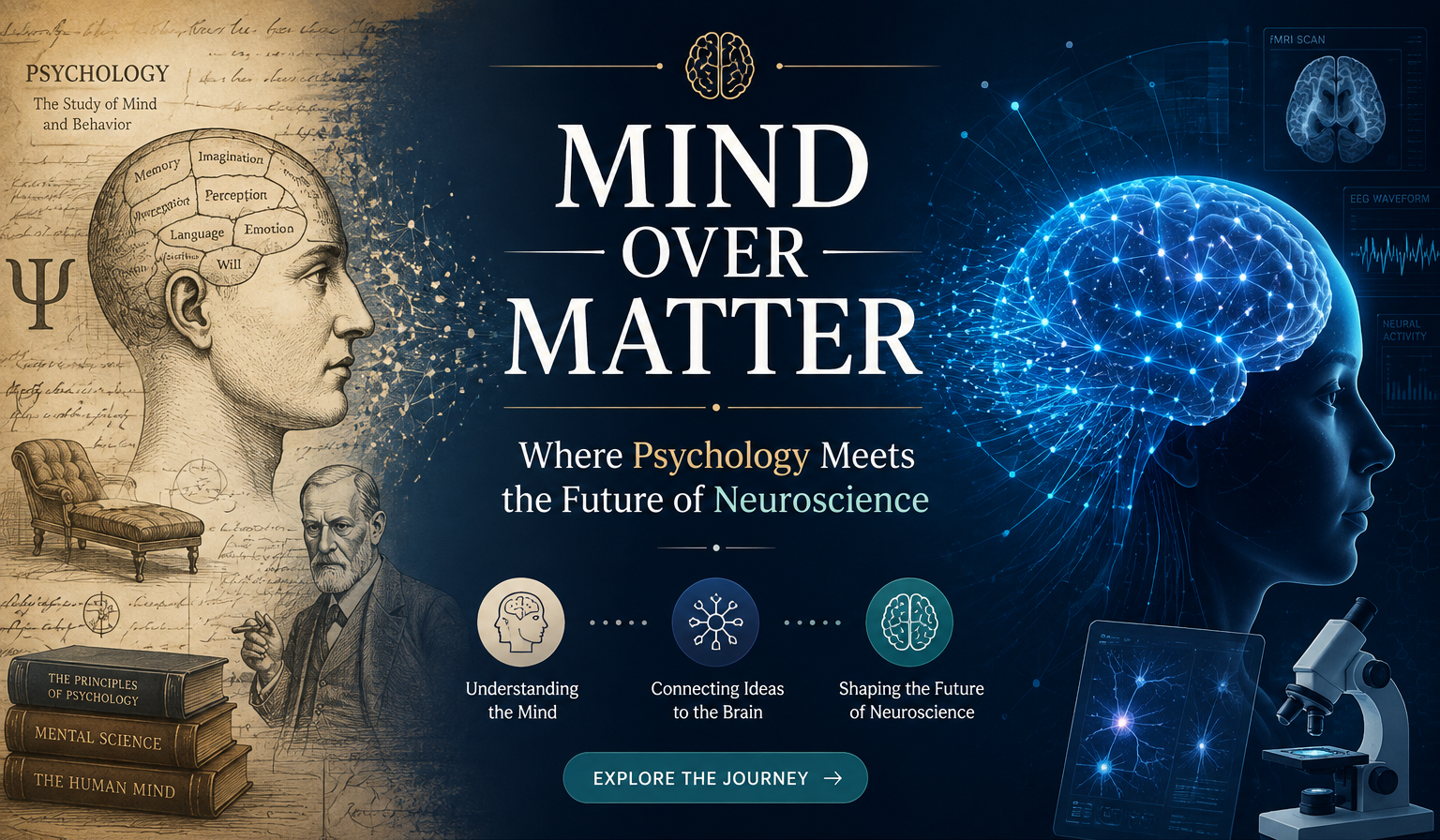
Where Psychology Meets the Future of Neuroscience
Try not to get stuck over analysing the past. Instead, appreciate how your mind can help you build your future.
You often look for the deeper reasons behind how things work, noticing connections that others might overlook. You value the lessons you've learned from your past, but you may also feel a strong urge to start a new chapter in your life. Sometimes, you sense a restless energy, as if you have untapped potential ready to be used for something meaningful.
If you feel like you are outgrowing your current situation to follow a bigger purpose, you are not just imagining it. This feeling is rooted in real biological and psychological processes.
For a long time, early humanistic psychology and modern neuroscience seemed very different. But now there is a clear connection between them. When we compare Alfred Adler’s idea of "Teleology" with the modern "Free Energy Principle" in neuroscience, we find they are surprisingly similar. Adler seemed to understand how the brain works long before science could explain it.
Let’s look at how early psychology and modern brain science agree on one important idea: we are guided by our future, not just shaped by our past. As you keep reading, you’ll find practical tips to use these ideas in your own life and make the most of your brain’s abilities.
Where Psychology Meets the Future of Neuroscience
Adler disagreed with Freud. He believed our future goals guide us. This idea, called Teleology, means our actions are shaped by what we want to achieve, not just by our past.
- The Hidden North Star (Fictional Final Goal): Adler thought everyone has a subconscious, ideal vision of their perfect life—a place where they feel safe, important, and successful. Even if you haven’t put it into words, this vision quietly guides your decisions.
- The Drive to Overcome (Striving): Everything you do is an effort to move closer to that ideal future, working through any feelings of weakness or self-doubt along the way.
Adler believed you can’t really understand someone just by looking at their past. Instead, you need to see what future they are trying to create.
The Neuroscience View: The Prediction Engine
Jumping to today, one of the most interesting ideas in neuroscience is Predictive Processing, which is based on the Free Energy Principle.
Although it might sound complicated, the idea is simple: your brain’s main job is to reduce chaos, surprise, and uncertainty. Neuroscientists call this "informational entropy" or "free energy."
In the past, people thought the brain was passive, like a camera that only records what it sees and hears. Now, neuroscience shows the brain is always making predictions about what will happen next.
- The Prediction Machine: Your brain is always creating expectations about the world. It tries to stay ahead by predicting what you will see, hear, and feel.
- The Shock of Surprise (Prediction Error): When reality is different from what your brain expected, you get a "prediction error." Your brain dislikes this and sees surprise as a kind of stress that needs to be resolved.
- Taking Action (Active Inference): To deal with this surprise, you have two choices. You can adjust your thinking to accept the new reality, or you can act to make the world fit your expectations. For example, if you expect a room to be warm but it’s cold, you might put on a sweater or turn up the heat. This way, you change your environment to match what you expected.
From this scientific perspective, human behavior is the brain’s way of trying to make the outside world match its own predictions.
The Convergence: Two Languages, One Truth
When we compare Adler’s ideas from a hundred years ago with today’s brain science, they both describe the same human experience.
1. Core Beliefs Shape Reality. In neuroscience, your strongest expectations about yourself are called High-Level Priors. These are the basic beliefs that guide how you act. Adler called this the Fictional Final Goal. Both theories agree that your brain works hard to avoid the stress of being wrong, so it pushes you to make your reality match these core beliefs.
2. Building the Blueprint: Adler said we "strive" to reach our main goals. Neuroscience calls this Active Inference, which means changing your environment to fit your expectations. For example, if you believe you are meant to be an independent creator, working in a strict office job can feel wrong. To fix this, you might start learning new skills at night, build a new project, and plan to leave your job. Adler called this striving for your goal, while neuroscience calls it reducing surprise.
3. When the Blueprint is Broken: Both theories also explain why we sometimes feel mental distress.
- Adler believed that anxiety and neurosis happen when someone sticks to a rigid, unrealistic goal that doesn’t fit with reality.
- Neuroscience says mental distress happens when our core beliefs, or High-Level Priors, become too rigid. If we don’t update our expectations, we keep running into reality, which causes ongoing stress.
Both views suggest the same solution: we need to become aware of our hidden expectations, look at them closely, and update them so they are more flexible and realistic.
Conclusion
Alfred Adler didn’t have access to brain scanners or advanced technology. Still, by watching people closely, he saw that we actively shape our own lives, always working to make reality match our highest goals.
Today, modern science supports Adler’s ideas. You are not stuck in your past or held back by old problems. Your brain is built to help you shape your present and create the future you want.
To use these ideas in your own life, try spending a few minutes this week thinking or writing about your own 'fictional final goal.' What is the main vision or ideal future that guides your choices? How does it shape your daily actions? By exploring this, you can start to close the gap between what your brain expects and the life you want, making these ideas truly meaningful for you.
